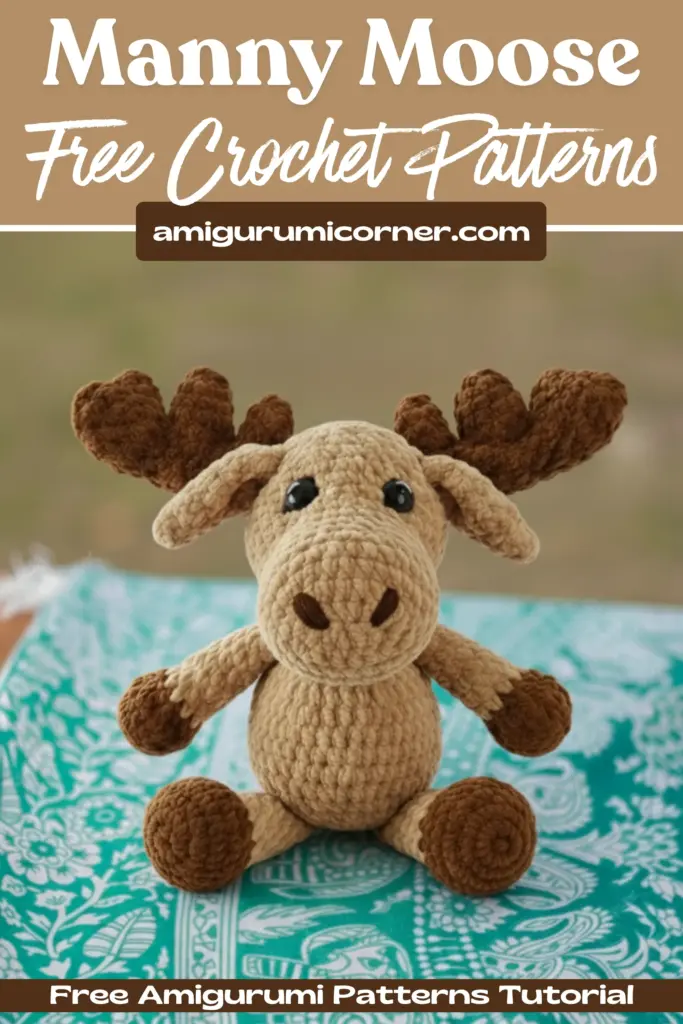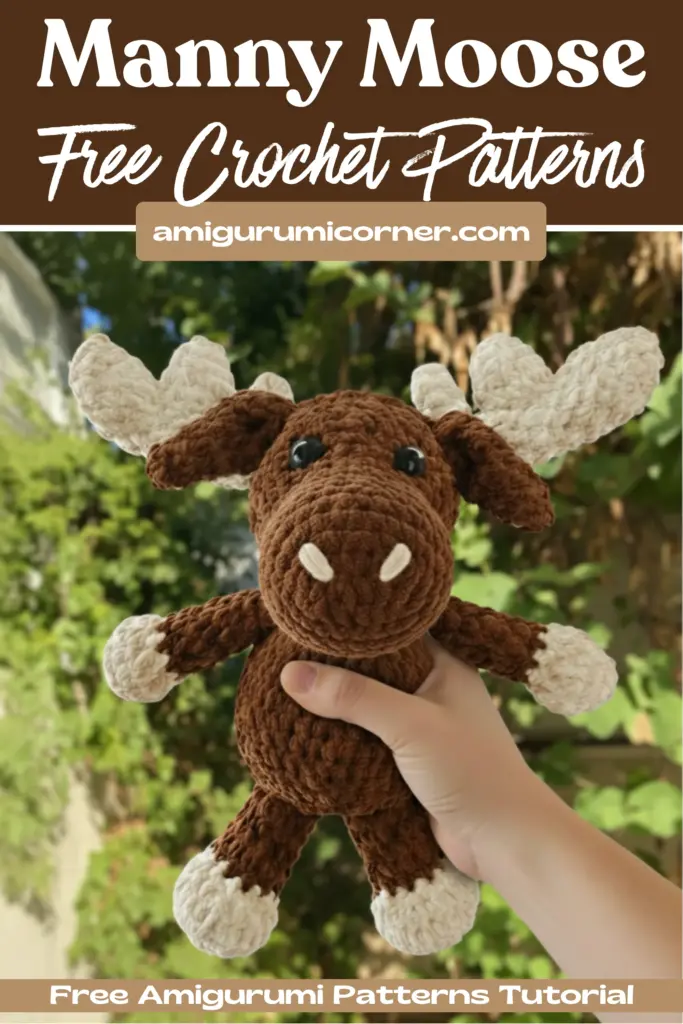

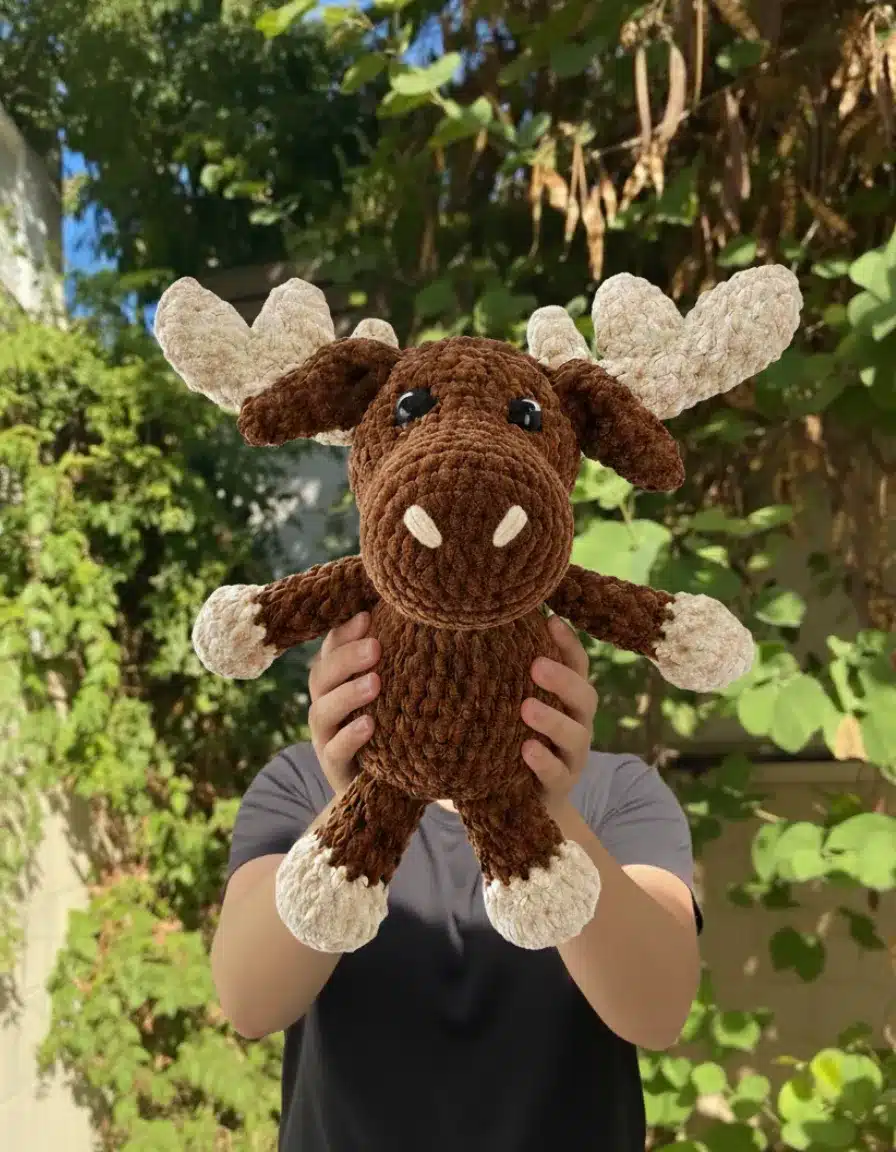
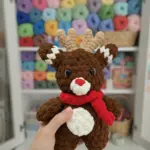
Looking for an adorable amigurumi project that combines charm with a rewarding challenge? This Manny Moose crochet pattern creates an 18-inch tall, huggable companion perfect for display or gifting. With detailed instructions and careful construction techniques, you’ll craft a professional-looking moose that showcases your crochet skills.
Remember it later!
Planning to try this soon? Pin it for a quick find later!
What You’ll Need
Yarn Requirements
To bring Manny Moose to life, gather the following materials:
Main Colors:
- Color A (Taupe): 200 yards of bulky size 6 yarn for the body and head
- Color B (Almond): 150 yards of super bulky size 6 yarn for antlers, arms, and legs
- Color C (Black): 3 yards of medium size 4 yarn for embroidered eyes
- Color D (White): 1 yard of medium size 4 yarn for eye highlights
Essential Tools and Supplies
- 8mm crochet hook (main work)
- 4mm crochet hook (eyes only)
- Darning needle for assembly
- Scissors
- Fabric pins for positioning pieces
- Stitch markers
- 1 pair of nylons (for stuffing technique)
- Approximately 24 ounces of fiber fill
- Optional: 16-20mm safety eyes if you prefer not to embroider

Understanding the Pattern
Skill Level and Specifications
This pattern falls into the intermediate difficulty category. The finished moose measures approximately 18 inches tall and 15 inches wide. Keep in mind that your final size may vary based on your tension—this pattern uses tighter tension for a more structured finish.
Important Technique Notes
This project uses continuous spiral construction rather than joined rounds. Always use a stitch marker to track the beginning and end of each row. The pattern incorporates a unique stuffing technique using nylons to create defined shapes, particularly in the snout and antlers.
Building the Foundation: Snout and Head
Creating the Snout
The snout forms the foundation for the entire head structure:
- Chain 7 and skip the first stitch
- Single crochet in the top two loops of the next 6 chains
- Continue around to work in the back loops, creating an oval shape
- Work increases to shape the snout from 12 to 36 stitches over 12 rows
- Begin stuffing partway through construction
Pro Tip: Cut a piece of nylon, knot one end, and turn it inside out so the knot stays hidden. This creates a separate compartment that helps maintain the snout’s distinctive shape when filled with fiber fill.
Completing the Head
Continue seamlessly from the snout, working increases to expand the head from 24 to 42 stitches at its widest point. The head construction includes:
- Strategic increases in rows 14-19 to create fullness
- Four rows of consistent stitching for stability
- Gradual decreases from row 24 onward
- Final closure by gathering the last stitches tightly
Remember to stuff every two rows for even filling. Tie off the nylon once both head and snout are completely stuffed.
Crafting Character: Ears and Eyes
Making Distinctive Ears
Each ear requires simple shaping:
- Start with a magic ring of 4 stitches
- Increase gradually to 14 stitches over 10 rows
- Create dimension by pinching the ear flat in two directions
- Sew the pinched area to create natural folds
- Attach ears to rows 21-23 of the head, spacing them 8-9 stitches apart
Position the ears pointing downward for an authentic moose appearance. Use fabric pins to test placement before permanently sewing.
Embroidering Expressive Eyes
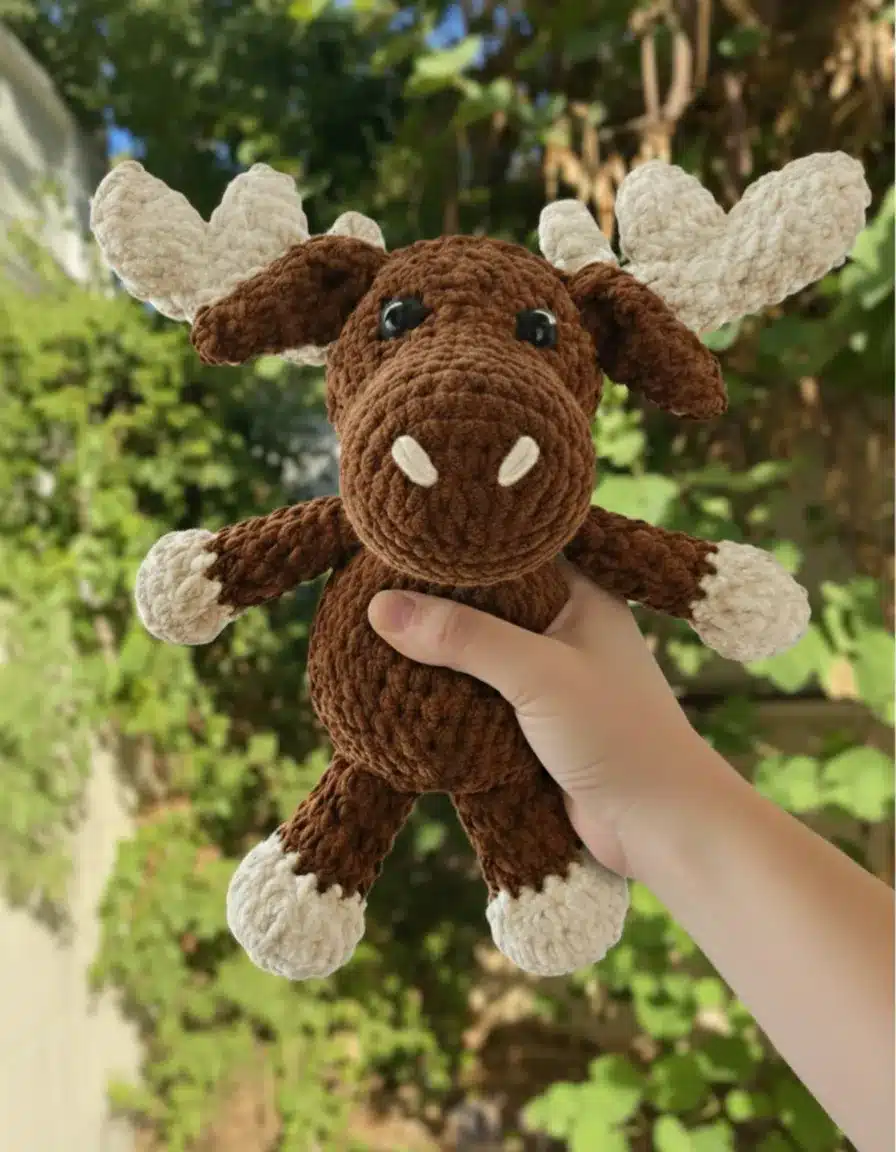
For embroidered eyes using a 4mm hook:
- Create a magic ring with 7 double crochets
- Work 7 slip stitches in the second row
- Add white highlights by inserting yarn from behind, skipping stitches strategically
- Position eyes on rows 16-17 with 4 stitches between them
- Sew halfway around, stuff lightly with yarn ends and fiber fill, then complete sewing
Shaping the Face
This crucial step brings personality to your moose:
- Thread a 12-inch strand of black yarn through a darning needle
- Insert at the corner of one eye and push through to the second eye
- Go down one stitch and push the needle under the head
- Repeat for the other eye
- Pull both strands tight to create eye indentation
- Tie off securely and weave in ends
This technique creates depth and definition that transforms the flat face into an endearing expression.
Building Impressive Antlers
The antlers consist of three parts assembled together:
Antler Part 1 (Main Branch)
- Start with 6 stitches in a magic ring
- Increase to 15 stitches at the widest point
- Decrease back to 9 stitches
- Continue with 11 rows of consistent stitching
- Use the nylon stuffing technique
- Thread yarn through from row 1 to the last row and pull to create a natural curve
Antler Part 2 (First Prong)
- Work 5 rows starting from a magic ring
- Increase from 6 to 12 stitches
- Attach to rows 8-12 of Part 1, ensuring proper upward positioning
Antler Part 3 (Second Prong)
- Create a smaller 4-row piece
- Attach to rows 14-16 of Part 1
Assembly Tip: Use fabric pins extensively to position antler components before sewing. The antlers should angle naturally when attached to row 25 of the head, directly behind the ears.
Constructing the Body
The body provides stability and proportion:
- Begin with 6 stitches in a magic ring
- Increase to a maximum of 42 stitches by row 12
- Maintain shape with four rows of consistent stitching
- Gradually decrease to close the body
- Use the nylon stuffing method for firm, even filling
Attach the completed head to rows 20-22 of the body, working back and forth between pieces to create a secure connection.
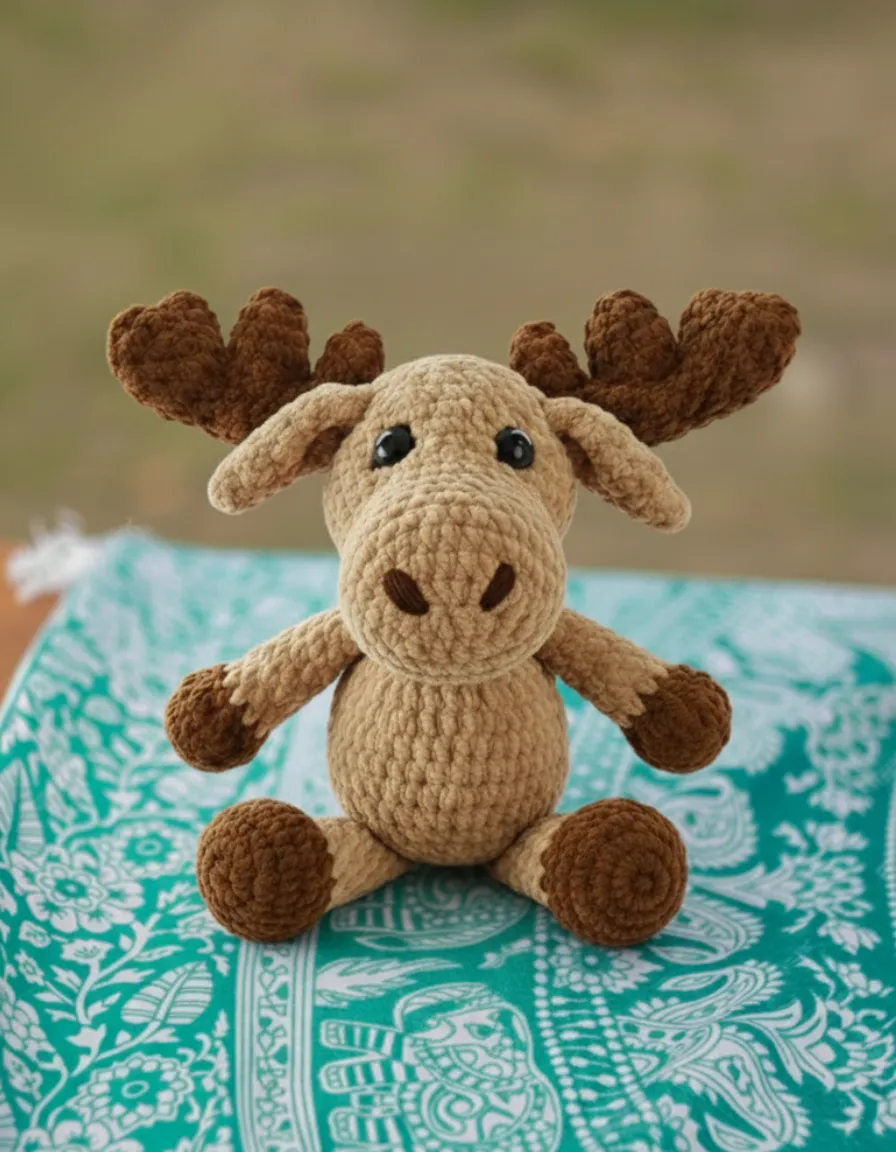
Adding Limbs for Stability
Arms
Each arm combines two colors:
- Start with Color B (Almond) for the hooves
- Work increases to 18 stitches, then decrease to 8
- Switch to Color A (Taupe) for the upper arm
- Continue for 9 rows of consistent stitching
- Pinch flat and sew closed
- Attach to row 6 of the body, directly below the ears
Legs
Legs follow a similar construction:
- Create larger hooves starting with 8 stitches
- Increase to 24 stitches before decreasing to 12
- Switch colors and continue for 7 rows
- Final decrease to 6 stitches for tapering
- Attach to row 18 of the body
Final Touches: Nostrils
Complete your moose with embroidered nostrils:
- Position nostrils on row 5 of the snout, aligned with the eyes
- Insert the needle 2 stitches below the desired nostril location
- Create each nostril by inserting one stitch up and one stitch over
- Space nostrils approximately 7 stitches apart
- Push yarn ends to the bottom of the snout and tie off
Assembly and Finishing
Take your time with assembly for professional results:
- Use fabric pins to test placement of all pieces before sewing
- Sew securely with a darning needle using whip stitch or ladder stitch
- Weave in all ends carefully to prevent unraveling
- Check for any gaps in stuffing and add more if needed
- Give your moose a final shape adjustment
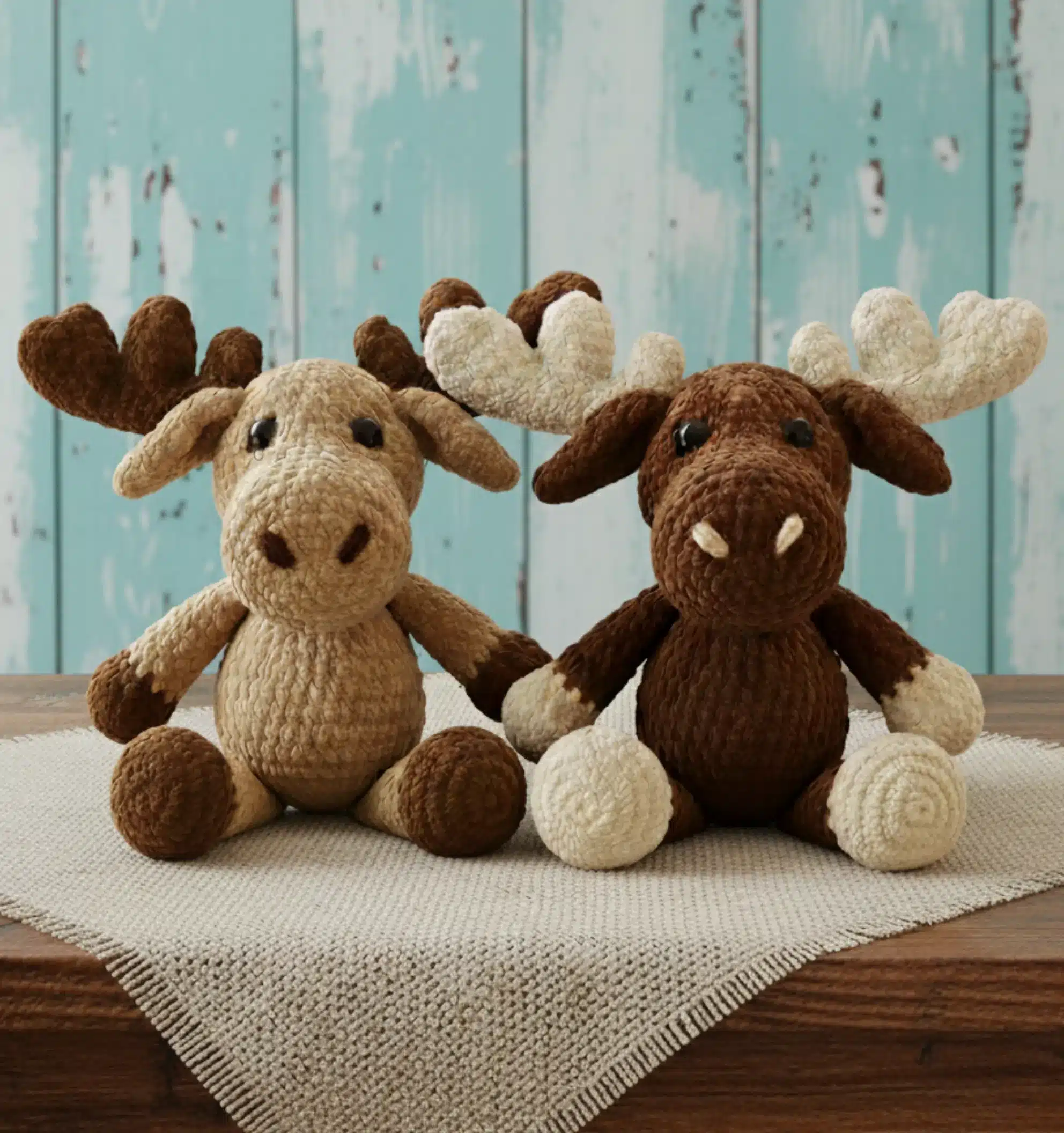
Tips for Success
Tension Matters: This pattern requires tighter tension than typical amigurumi. If your stitches show gaps with stuffing visible, try going down a hook size.
Stuffing Strategy: Fill firmly but not so tight that stitches distort. The nylon compartment technique helps maintain shape in key areas.
Color Changes: When switching yarn colors, complete the last stitch of the old color by pulling through with the new color for a clean transition.
Positioning: Step back frequently during assembly to check proportions and positioning from all angles.
Conclusion
Creating Manny Moose represents a rewarding intermediate crochet project that develops your shaping, assembly, and finishing skills. The combination of unique construction techniques—like the nylon stuffing compartments and facial shaping—results in a professional-quality amigurumi with distinctive character.
Whether you’re making this charming moose as a gift or adding to your own collection, the detailed construction creates a sturdy, huggable friend built to last. Take your time with each component, pay attention to positioning during assembly, and enjoy the process of watching your moose come to life stitch by stitch.
You’ll Love Also This
Remember it later!
Planning to try this soon? Pin it for a quick find later!